Dr. Sofya Dymchenko 🐭

Hi, salut, привет! I recently defended my Ph.D. at the University Grenoble Alpes and INRIA (France), I worked with Bruno Raffin in the Datamove team. I was a member of the Melissa project, which develops a framework for efficient large-scale deep surrogate training on HPC systems.
Currently, I am actively looking for new opportunities to continue research on deep PDE surrogates, for example, in engineering or earth sciences; I am open to R&D roles in private sector as well as academic postdoc positions.
My thesis research question was:
“How to make training of data-driven surrogates more data-efficient, i.e., obtaining accurate surrogate with fewer generated simulations?”
The cost of generating training data from physical solvers is a major bottleneck in scientific deep learning, it especially limits the scaling of deep surrogate models application to complex real-world problems. Compared to classical deep learning, with solvers we have the power to create data, but with such power comes the question: “Which data to generate?”. Current standard practice is to create the data by uniformly sampling input parameters of a solver. Is it really the best way? It was my thesis’s goal to close this gap. I developed an active learning method that reduces the number of training data simulations required by choosing more informative input parameters based on surrogate training loss. For more details, see publications in the list below, the recording of my presentation at SC 2024 [youtube-link], and my PhD thesis [here].
I defended my thesis on the 21st of April 2026. I plan to continue working in the field of AI for Science. I want:
- to work back-to-back in a team of passionate researchers and engineers,
- to apply my skills and knowledge to solving real-world scientific cases,
- to stay connected to the scientific community by publishing and presenting the results, and
- to keep learning and developing myself in this fast-evolving field.
Do not hesitate sending me a message to: sofya(dot)dymchenko(at)gmail(dot)com.
#openscience #inclusivescience #phdwithadhd
my publications
-
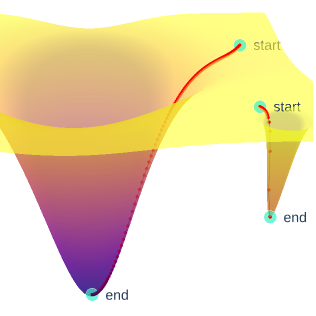 Loss-driven sampling within hard-to-learn areas for simulation-based neural network trainingIn MLPS 2023 - Machine Learning and the Physical Sciences Workshop at NeurIPS 2023 - 37th conference on Neural Information Processing Systems, Dec 2023
 -
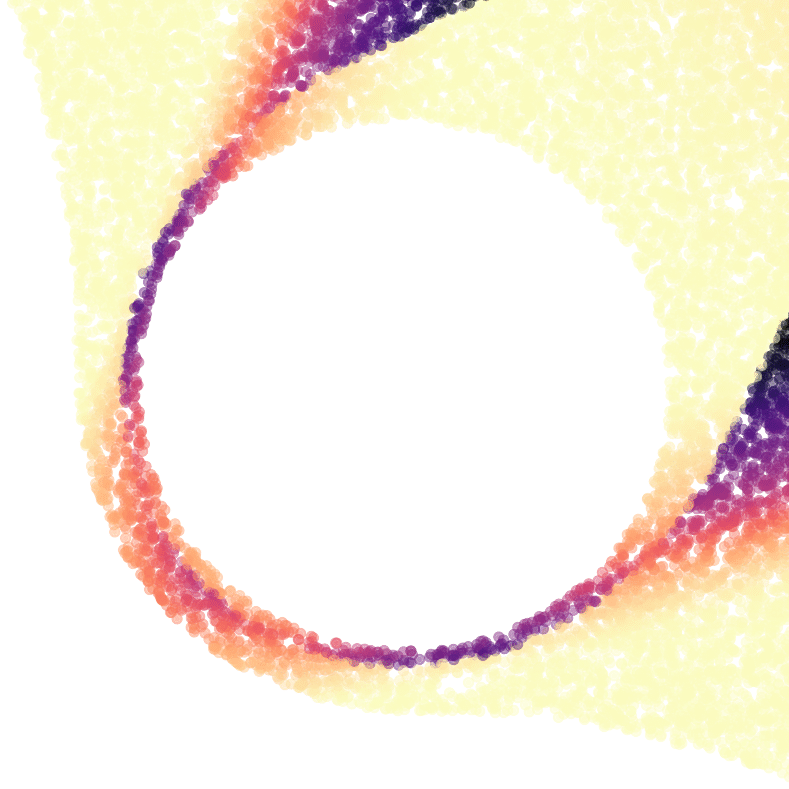 Poster: Loss-driven sampling for online neural network training with large scale simulationsSep 2023Poster
 -
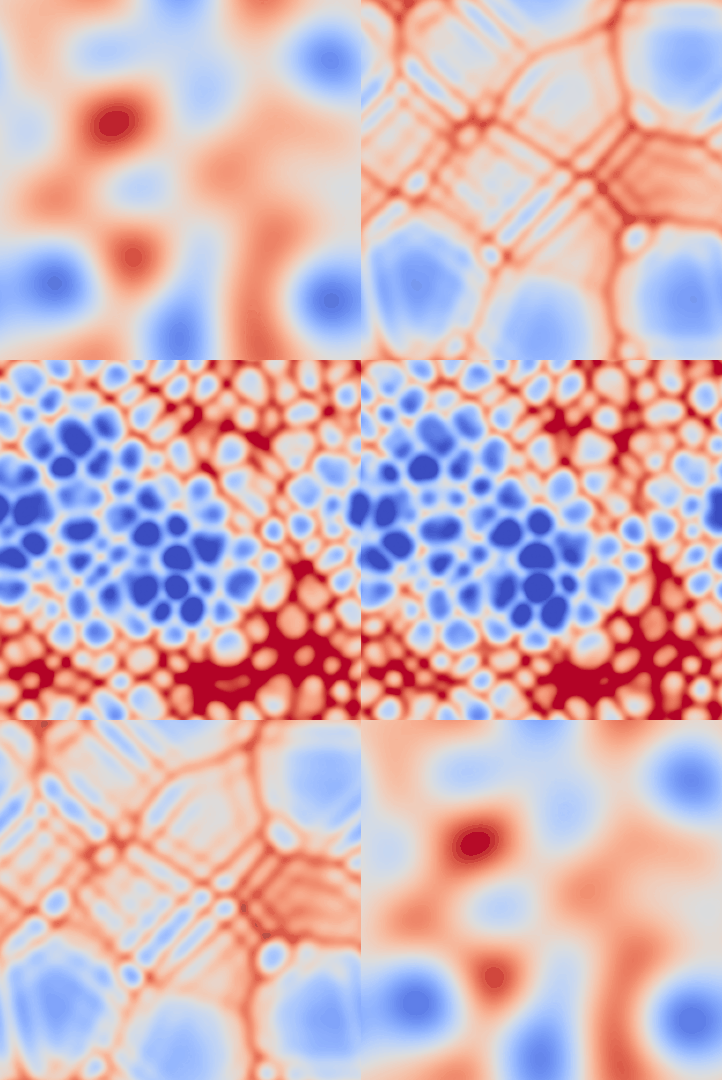 Learning Where to Simulate: Generative Active Sampling for Online PDE Surrogate TrainingIn Advances in Neural Information Processing Systems, Sep 2026